Mobile app store spending is set to surge 267% from 2021-2030, hitting $288 billion in 2030 alone, according to Sensor Tower’s report. Downloads will skyrocket too, with 2.9 trillion new apps and games over the decade.
On the surface, it looks like amazing growth, right? But a million installs can still mean a million abandoned icons buried on someone’s phone.
But here’s the truth: more downloads don’t equal loyalty. Getting people to pick your app once is easy; making them stay is the real challenge. And no, it’s not about ads or one-time campaigns. It’s about something deeper.
The real drivers are beneath the surface level yet define success, i.e., Trust, Timing, and Touchpoints.
Everything starts with trust, and mobile apps are no different.
Trust isn’t built in one grand gesture; it’s built in the details.
The deeper and more personal the interaction, the more essential it is to design for clarity, control, and care.
For mobile apps, trust means becoming a part of people’s daily rhythm, reliable enough that they don’t just use the mobile app, they recommend it. Without that, downloads remain just a vanity metric.
But trust alone won’t make the magic happen. An app also needs to show up at the right moment.
Think of timing as the difference between being helpful and being annoying. A travel mobile app nudging you with a lounge discount while you’re at the airport? Perfect timing. The same message a week later? Pure noise.
Relevance is rarely about reaching everyone; it’s about reaching someone, in their space, at their time, on the channel that feels most natural to them.
Once trust is built and timing is right, the next step is deciding: how to connect.
The key is to design touchpoints that add value, not distraction:
Touchpoints work best when they feel like part of the user’s flow rather than an interruption. Every nudge, reminder, or notification should answer the unspoken question: “Is this useful to me right now?”
The real winners of mobile app growth won’t be those chasing download numbers or running flashy campaigns. They’ll be the teams willing to do the harder, quieter work: creating experiences that feel natural, human, and indispensable.
Apps that stand out in 2025 will blur the line between utility and loyalty. They’ll anticipate needs without overstepping, respect boundaries while still adding value, and evolve alongside users rather than dictating to them.
Or, as Protik says, “Teams that prioritise such foundational work early often win users and long-term loyalty.”

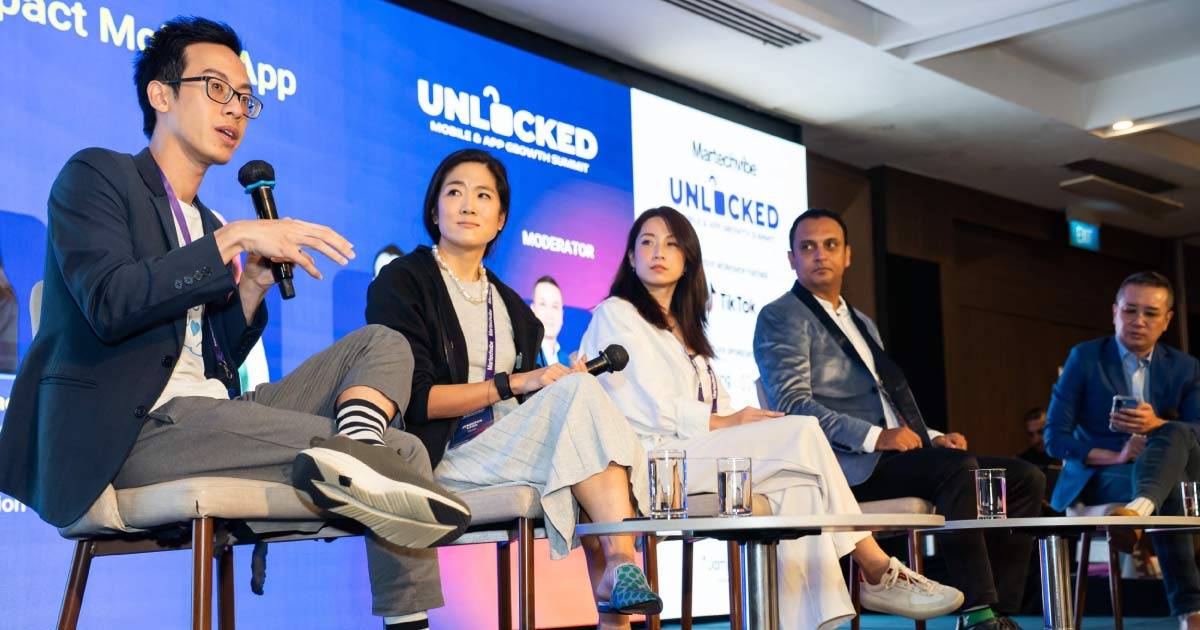
Cindy Chua is the Senior Investment Lead at Jobstreet Singapore, part of the SEEK Group. She oversees full funnel marketing investments across digital and offline channels, shaping how brands connect with audiences and drive sustainable growth. Her focus is on aligning media strategy with brand and user journeys, creating meaningful engagement and measurable outcomes.

Harriet leads Singapore’s largest experience design team. She works end-to-end—from strategy to execution to enhance customer experiences and drive human-centered innovation. A natural connector, Harriet collaborates across technology, brand, transformation, behavioural science, and design to shape both present and future experiences.

Esther Tan is currently serving as the Global Director of Marketing & E-Commerce at Plaza Premium Group, leading the charge in crafting group marketing and digital strategies, driven by curiosity and a passion for data. Her expertise extends to e-commerce, digital marketing, CRM, and loyalty, with a background spanning over 20 years in aviation, travel, and hospitality

Yong Yau Goh is the Chief Marketing Officer at BullSwipe, a global fintech platform that converts crypto to fiat instantly. He helms BullSwipe’s brand, marketing and communication development across its African, Middle Eastern and Asian markets, and has over two decades experience as an award-winning brand communicator. Prior to BullSwipe, Yong Yau was the Chief Marketing Officer at the AWHL Group, Singapore’s largest conglomerate of integrated health, wellness and beauty brands. Leading regional teams across diverse business verticals, he oversaw the positioning, transformation and communication strategies for the group’s flagship brands. Most of Yong Yau’s career, however, has focused on the agency’s side, where he led full-suite creative and communication teams in Singapore, Myanmar and Shanghai at the Coal Group. This was where he consulted for and engaged CEOs and senior management in some of the region’s leading corporates to take their organisations to greater heights in terms of brand direction, communication approach and business strategy — with proven results. These corporates include regional giants like StarHub, DBS, Mapletree, the Mottama Group and the METRO Group. Yong Yau is also a doctoral candidate at the Golden Gate University, where his work focuses on AI-driven marketing and communication technologies.

I lead at the dynamic intersection of business strategy, technical infrastructure, and growth operations. My core philosophy is clear: architecting autonomous ecosystems that liberate global headcount growth from revenue expansion.
By weaving together complex SaaS telemetry with unified data taxonomies spanning sales, product, marketing, and customer success, I empower enterprises to evolve from reactive reporting to proactive, automated revenue engines. I built the “Single Source of Truth” (SSOT) that offers C-suite executives the clarity needed to navigate intricate customer journeys and make pivotal, board-level decisions.

Throughout my career, I have dedicated myself to optimising the vital balance between top-line revenue generation and systemic risk mitigation. At TikTok, I mapped risk-versus-revenue trade-offs, assessing initiatives across User, Regulatory, and Platform risk vectors against Tapped, Untapped, and Lost revenue to unlock $500M in untapped platform monetisation and prepare executives for US Congressional hearings.